How Jeancen helped an Australian customer reduce material, fit, and tooling risk before mold build through PA66 direction setting, glass-fiber validation, moisture expansion assessment, and DFM optimization.
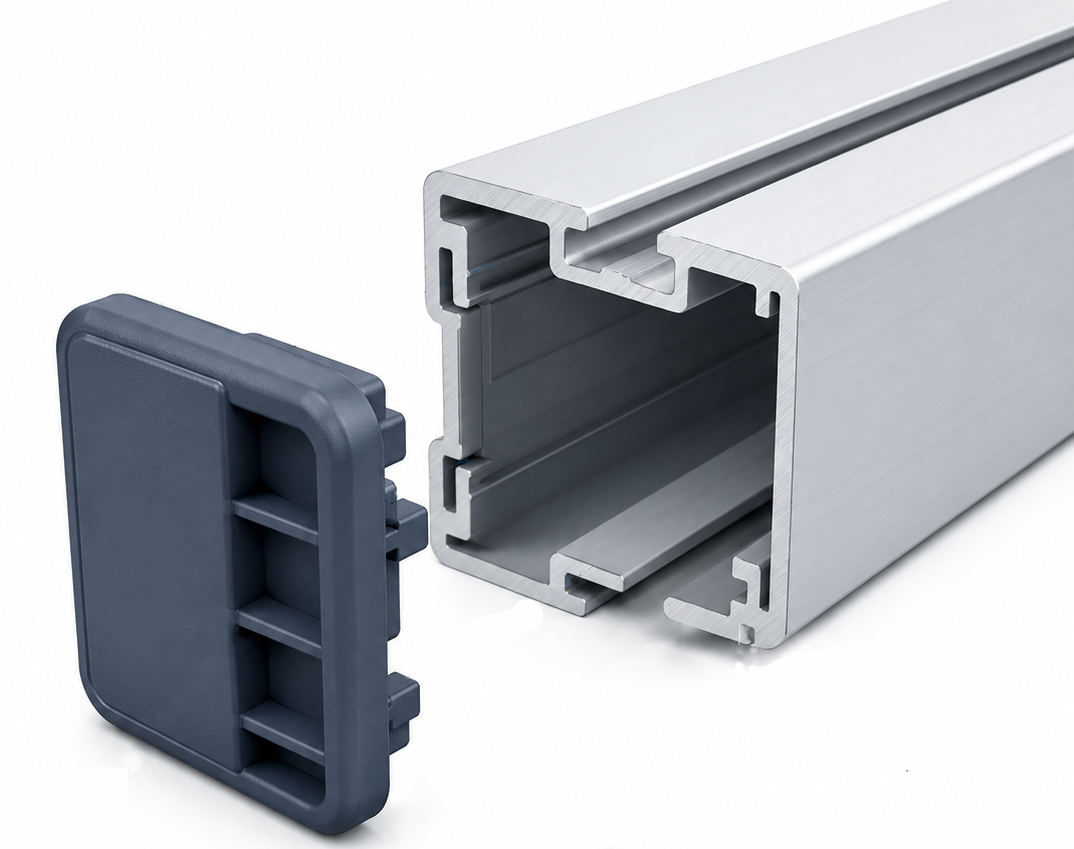
An Australian customer was developing a heavy-duty molded end cap for hardware use in a humid environment. The part also had a sliding-fit function, so material selection could not be based on strength alone. Long-term dimensional stability, wear behavior, and production practicality all mattered.
Engineers usually want a faster scan of the technical baseline before reading the full case narrative.
PA66 + 30% GF for a humid-environment functional application.
Heavy-duty hardware end cap with a sliding-fit function.
Moisture expansion control, fit stability, and thick-wall sink-risk management.
2-plate mold, 1x2 cavities, 4 sliders, side gate, and optimized ejection strategy.
The real challenge was not just “choose a nylon.” It was how to reduce risk across material, fit, moisture behavior, glass-fiber content, and mold manufacturability before the tool was built.
The customer needed guidance on whether PA6 or PA66 was more suitable for the application and use environment.
Once PA66 became the preferred material family, the next question was what GF percentage should be verified first.
After material direction became clearer, DFM still had to address wall thickness, ejection safety, grip texture, and manufacturability.
Based on the product information and service environment, our engineers recommended prioritizing PA66 over PA6. The decision was based on the application logic of the part, not on a generic material preference.
Compared with PA6, PA66 offered stronger mechanical properties, higher rigidity, better creep resistance, and better thermal stability for this application.
PA66 also offered lower water absorption and better dimensional stability, which was important because the part had a sliding-fit function in humid use conditions.
We also made it clear to the customer that PA66 typically carries a higher material cost than PA6, and that market pricing would still depend on the actual sourcing timing.
We did not lock the answer too early. Instead, we recommended starting from two more realistic GF options based on assembly validation and engineering practicality.
Instead of asking the customer to decide based only on datasheets, we structured the project around real validation steps.
We recommended PA66 as the better base direction for this humid-environment sliding-fit application.
We arranged sample validation using PA66 + 15% GF and PA66 + 30% GF so the customer could test against real assembly conditions.
We evaluated the likely dimensional effect of water absorption before the mold design was finalized.
Once the material direction was confirmed, we continued into DFM optimization to reduce mold manufacturing and trial-stage risk.
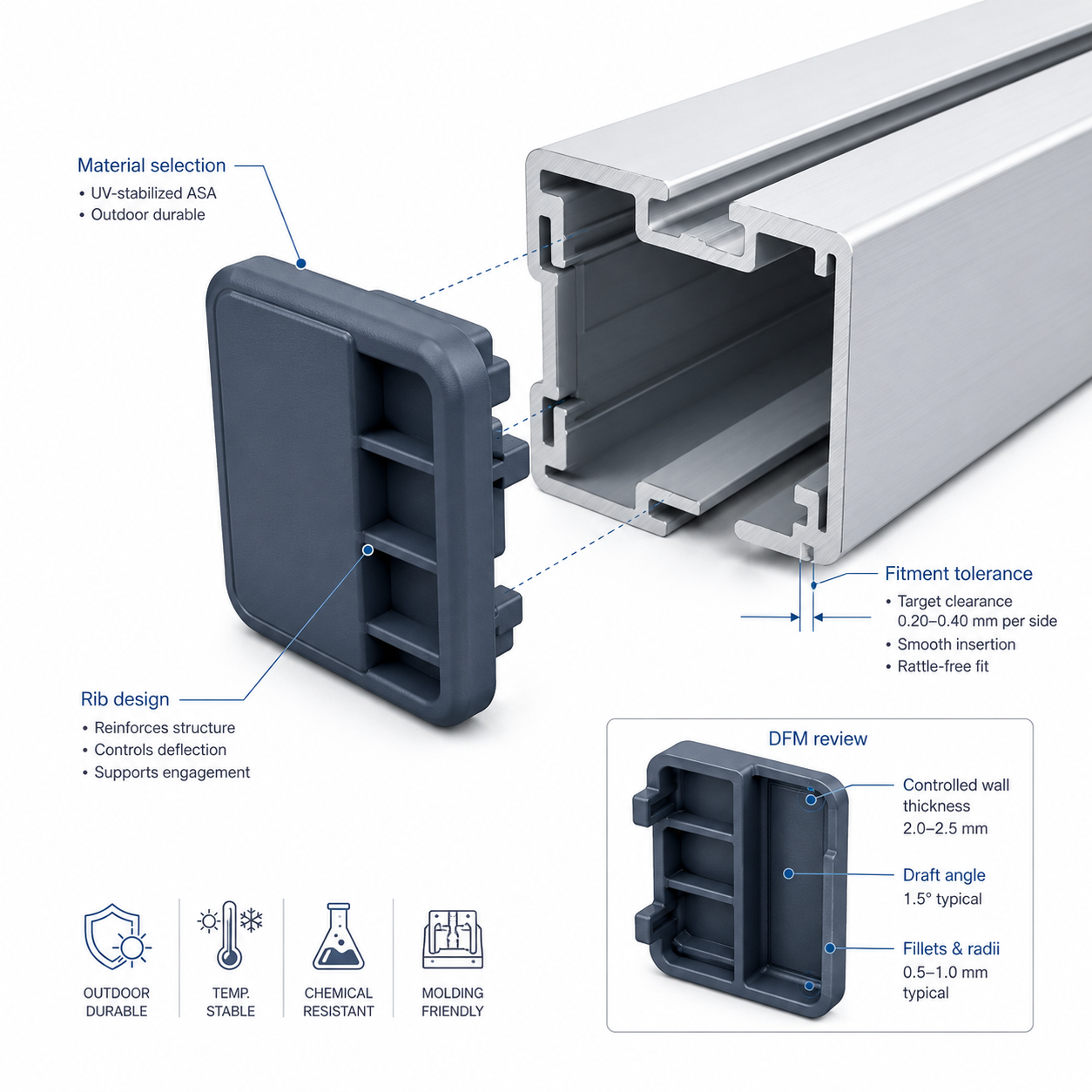
The necessary draft optimization was completed, but critical fit surfaces were kept draft-free where needed to preserve functional performance.
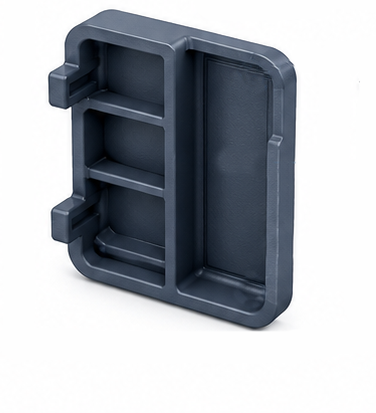
The part had a local maximum wall thickness of 3.76 mm in a structural zone. Rather than over-reducing material blindly, we kept the required structural mass and planned to compensate shrink risk through process optimization, including longer pack time and higher holding pressure.
Because the final material direction was glass-fiber reinforced nylon, balanced ejection was critical. We removed a 0.2 mm bottom chamfer to improve blade ejector contact area and added a circular reinforcement feature for sleeve ejection without damaging structure.
To improve clamping stability in actual use, we recommended adding VDI18 texture on the side gripping faces to increase friction and reduce slip risk during assembly.
After receiving samples and completing testing, the customer ultimately selected PA66 + 30% GF as the formal material direction.
The real value of this project is not only that the final answer became PA66 + 30% GF. The real value is that Jeancen helped the customer make safer engineering decisions before mold build, instead of leaving the risk to the trial stage.
If your project depends on material choice, dimensional stability, wear behavior, fitment, or pre-mold DFM judgment, we can help review the main risks before the tooling decision is locked in.
Explore our full library of material selection and DFM case studies on the main site if you want broader technical context before you send your project.
Please include: